Warm rain creates a difficult clothing problem. A jacket can block a cloudburst yet feel like a portable greenhouse. For hikers, commuters, and outdoor workers, comfort depends on more than waterproofing. Sweat must escape. Air must circulate. The fabric should also dry quickly after sudden showers.
So, what is the best material for hot weather rain gear? The honest answer depends on rainfall, activity level, and local humidity. Lightweight nylon and polyester offer practical durability and often dry rapidly. Their waterproof coatings can resist heavy rain, but poor ventilation may cause clammy discomfort. Waterproof-breathable laminates, including membranes made with expanded fluoropolymer or polyurethane technology, can release some vapor while blocking liquid water. However, breathability ratings rarely match real-world comfort perfectly.
Small details matter. Look for pit zips, mesh-backed pockets, adjustable cuffs, and a loose athletic fit. Fully taped seams reduce leaks around shoulders and pockets. A fabric with a durable water-repellent finish can help rain bead across the surface, although that finish may weaken after washing. Care instructions matter more than many buyers expect.
Field experience often reveals uncomfortable truths. A thin poncho may ventilate better than an expensive shell during slow walking. It may also flap badly in strong wind. I have overtrusted laboratory ratings before, especially when humidity was high and my backpack covered the rear vents. The best choice is therefore a balanced system, not a magical fabric. Lightweight construction, honest testing, and suitable ventilation usually matter most in hot weather.
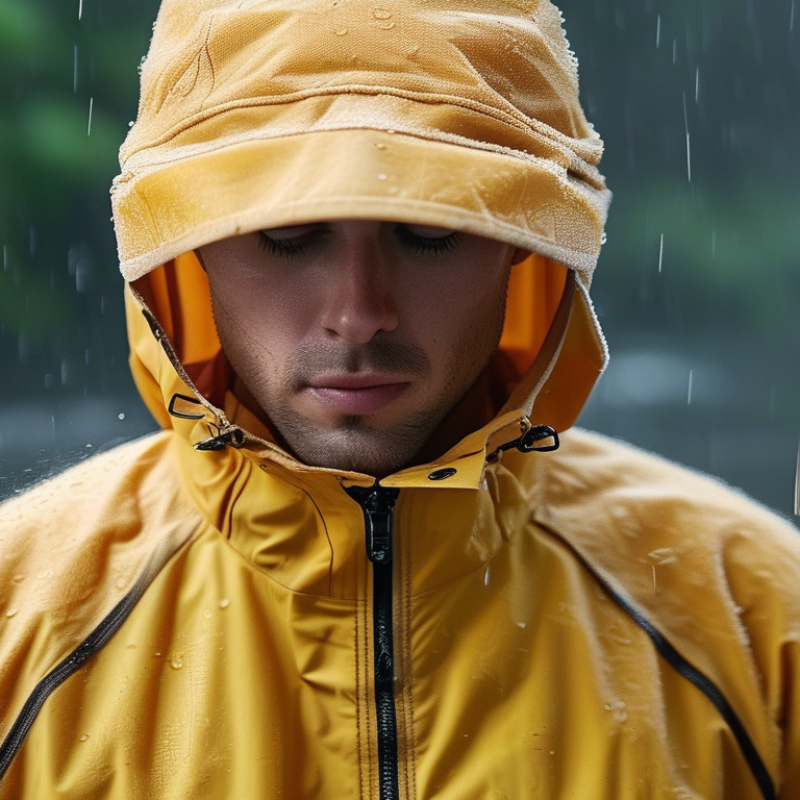
What makes rain gear suitable for hot weather is not waterproofing alone. It must release body vapor before sweat pools inside. ISO 11092:2014 measures evaporative resistance, called Ret, in m²·Pa/W. Lower Ret values indicate easier moisture transfer. Look for laboratory results, not vague claims like “highly breathable.” A lightweight woven polyester or nylon face fabric can resist abrasion. A hydrophilic membrane or porous coating can then manage vapor. No material stays perfectly breathable during heavy rain.
Humidity changes everything. The U.S. National Weather Service heat-index table shows 95°F with 50% humidity can feel like 107°F. The 2016 NIOSH Criteria for a Recommended Standard identifies impermeable clothing as an added heat burden.
Therefore, hot-weather rainwear should include pit zips, mesh vents, a loose athletic cut, and adjustable cuffs. A three-layer design may improve durability, but it can feel noticeably warmer. I would not treat one impressive breathability number as complete proof.
Tips: Check both MVTR and Ret values. Compare tests using the same method. Choose light colors and thin fabrics when sunlight is strong. Wear a moisture-wicking base layer underneath. Test the jacket during a short walk before trusting it outdoors. Small leaks matter, but trapped heat matters more.
In hot rain, comfort depends less on waterproofing alone than on how quickly fabric moves sweat away. A breathable shell lets warm vapor escape through microscopic pores or controlled vents. Without that release, moisture collects inside, even when rain stays outside. During a humid afternoon hike, I noticed the difference clearly. My shoulders stayed dry, but my shirt became damp from trapped heat. No fabric is perfect.
Tips: Choose a lightweight two-layer or three-layer shell with a moisture-permeable membrane. Look for pit zips, mesh-backed pockets, and adjustable cuffs. Wear a thin merino or synthetic base layer. Avoid cotton. It holds sweat against your skin. Test the jacket indoors with gentle movement first. Check whether the lining feels clammy after ten minutes.
Material choice should match the activity. Lightweight nylon or polyester shells dry quickly and resist abrasion. Softer laminated fabrics may feel quieter and more flexible. Breathability ratings help, but they cannot predict every experience. Humidity, backpack pressure, and loose clothing change performance. A highly breathable fabric may still feel warm under a loaded pack. I have also misjudged fabric by touch. A cool surface may spread moisture without removing it. Good rain gear manages vapor, airflow, and skin contact together.
Moisture regain shows how much water vapor a dry fiber can absorb under standard atmospheric conditions. Higher values may help buffer perspiration, while lower values generally support faster drying. In real rain gear, comfort also depends on fabric construction, ventilation, coatings, and membrane design.
Key takeaway: Polyester has very low moisture regain and can dry quickly, while wool and cotton absorb more moisture. For hot, wet conditions, a lightweight waterproof fabric with good water-vapor transmission and effective ventilation is usually more important than fiber content alone.
Nylon, polyester, and natural fabrics each handle hot rain differently. Nylon feels light and packs easily. In my experience, it resists sudden showers well and dries quickly after a wet commute. However, tightly coated nylon can trap heat against the skin. It may feel clammy during slow walks.
Polyester often offers better shape retention and strong everyday durability. Its fibers absorb little water, so the fabric dries fast. A loose weave, mesh lining, or underarm vents can improve comfort. Still, polyester is not automatically cooler. Construction matters as much as fiber content. Natural fabrics, such as cotton and linen, feel soft and breathable in dry heat. Once soaked, cotton becomes heavy and dries slowly. Linen dries somewhat faster, but it usually needs a waterproof layer to handle steady rain. No fabric wins every test.
Tips: Choose a lightweight shell with sealed seams and ventilation. Check the fabric weight before buying. Wear a thin moisture-wicking shirt underneath. I once chose a very light jacket that protected me well, but its sleeves felt sticky after twenty minutes. That mistake changed my priorities. For humid weather, a breathable polyester or nylon shell may work better than thick waterproof fabric. If comfort matters most, test the jacket while moving, not just standing indoors. I may be oversimplifying, but small vents often matter more than a impressive waterproof rating.
What Is the Best Material for Hot Weather Rain Gear?
Hot-weather rain gear needs a waterproof breathable membrane, not simply a thin shell. Warm air can hold about 7% more moisture for every 1°C increase, according to NOAA climate guidance. Sweat therefore accumulates quickly beneath poorly designed fabric. Microporous membranes allow vapor to escape while blocking liquid rain. Hydrophilic polyurethane membranes move moisture through chemical diffusion. Both systems can work, but performance depends on humidity, fabric construction, and ventilation. Very light three-layer laminates usually balance protection and comfort better than heavy two-layer designs. They also reduce the clammy feeling during slow, humid walks.
Laboratory figures need careful interpretation. ISO 11092 measures evaporative resistance, or RET; lower values indicate easier moisture transfer. EN 343:2019 separately evaluates waterproofness and breathability. The 2024 Outdoor Participation Trends Report recorded 175.8 million U.S. participants in outdoor recreation during 2023, increasing demand for lighter protective clothing. Yet membrane ratings do not reproduce a crowded summer trail, wet pack straps, or blocked pit zips. I once assumed the highest breathability number meant the coolest jacket. That assumption was too simple. Face-fabric wetting, seam tape, and worn water-repellent finishes can reduce real-world comfort. A practical choice combines a lightweight membrane, fully sealed seams, adjustable vents, and a relaxed fit. Small details matter.
| Rain Gear Construction | Typical Waterproofing | Breathability | Typical Weight | Warm-Weather Comfort | Best Application |
|---|---|---|---|---|---|
| 2.5-layer waterproof membrane Membrane with a printed or coated protective layer inside |
Generally suitable for sustained rain when seams are sealed; performance varies by fabric and construction | Moderate to high; moisture vapor transmission depends on membrane type, humidity, and temperature difference | Approximately 200–400 g for a lightweight jacket | Very good when ventilation openings are included | Travel, hiking, cycling, and general-purpose summer rain protection |
| 3-layer waterproof membrane Outer fabric, membrane, and protective inner fabric bonded together |
Usually offers strong resistance to prolonged rain, provided the seams and closures are properly sealed | Moderate to very high in advanced constructions; lower RET values indicate better evaporative resistance | Approximately 300–550 g for a lightweight jacket | Good to very good, with excellent durability but often more structure | Frequent outdoor use, trekking, exposed conditions, and repeated washing |
| Hydrophilic polyurethane membrane Non-porous membrane that transports water vapor through the material |
Can provide dependable waterproofing when laminated correctly and combined with sealed seams | Performance is humidity-responsive; breathability commonly improves as the temperature and humidity gradient increases | Approximately 220–450 g for a lightweight jacket | Good, although high humidity can reduce drying efficiency | Warm, wet climates where packability and flexible fabric are priorities |
| Microporous membrane Porous film designed to block liquid water while allowing vapor movement |
Typically high when the membrane is protected from contamination and the outer fabric remains well maintained | Often high in laboratory testing; real-world performance decreases when sweat, oils, dirt, or condensation block airflow paths | Approximately 250–500 g for a lightweight jacket | Good in active use, especially with loose fit and ventilation | Active outdoor use in changeable rain and moderate-to-heavy exertion |
| Coated nylon or polyester Fabric covered with a continuous waterproof coating rather than a separate membrane |
Good to very high initially; coating quality, seam sealing, flexing, and abrasion strongly affect durability | Low to moderate; many continuous coatings restrict vapor transfer more than breathable membranes | Approximately 150–350 g for a lightweight jacket | Fair; may feel clammy during exercise or in high humidity | Short showers, emergency shells, commuting, and low-intensity activities |
| Uncoated woven fabric with durable water-repellent finish Relies mainly on surface water repellency |
Suitable for light drizzle or brief showers, but not a substitute for a waterproof membrane in prolonged rain | High, because air and vapor can pass through the fabric more freely | Approximately 150–300 g for a lightweight jacket | Very good in light precipitation and high activity | Breathable wind shells and short-duration light rain |
Choosing rain gear for hot weather starts with your climate, not a fabric label. In humid regions, lightweight nylon or polyester with a water-resistant coating can dry quickly and feel less restrictive. However, coated fabrics often trap heat during steady movement. A waterproof breathable membrane may release more vapor, but it cannot defeat saturated air. In tropical rain, airflow still matters.
For hiking, look for a light shell with pit zips, mesh pockets, and an adjustable hood. These features can cool you when the rain pauses. A loose poncho may suit slow walking because it allows air to move around your torso. It can become awkward on narrow trails or in strong wind.
For cycling, choose a close-fitting jacket with stretch panels and longer rear coverage. Reflective details also improve visibility in heavy rain.
I once wore a fully waterproof jacket during a warm, short hike. The rain stayed outside, but sweat soaked my shirt. That experience changed how I judge “best” materials. Laboratory waterproof ratings help, yet they cannot measure comfort on a crowded train or a steep climb. Check the fabric weight, seam sealing, ventilation, and drying time. Then match them to your activity level. For brief city showers, a thin coated shell may work well. For long hikes, a breathable three-layer fabric offers better protection, though it costs more and may feel warmer. Fit matters more. A jacket that blocks movement can make any material disappointing.
: It should block rain while releasing body vapor. Waterproofing alone is not enough. Look for vents, light fabric, and tested breathability.
MVTR measures moisture vapor transfer. Ret measures resistance to vapor movement. Lower Ret values usually indicate easier moisture transfer.
Humid air slows sweat evaporation. At 95°F and 50% humidity, conditions can feel like 107°F. Small vents help.
Pit zips, mesh panels, loose cuts, and adjustable cuffs can release trapped heat. Underarm vents are especially useful during movement.
Not always. Lightweight nylon packs easily, while polyester often keeps its shape. Fabric construction matters as much as fiber content.
Cotton feels comfortable when dry but becomes heavy when soaked. Linen dries faster, but usually needs a waterproof outer layer.
Choose a thin, moisture-wicking base layer. Avoid heavy cotton shirts. They can stay damp against your skin.
Take a short walk while wearing it. Check your sleeves, back, and underarms afterward. Standing indoors proves very little.
It may improve durability, but it can feel warmer. A high breathability number is not complete proof. Construction still needs checking.
Do not focus only on waterproof ratings. I may be oversimplifying, but trapped heat can matter more than small leaks.
Choosing what is the best material for hot weather rain gear depends on breathability, moisture control, and the conditions you expect to face. Lightweight nylon and polyester are popular because they dry quickly, resist water, and provide useful durability without adding much weight. Natural fabrics may feel comfortable, but they can absorb moisture and dry more slowly unless specially treated. For warm, humid weather, the most comfortable rain gear should allow perspiration vapor to escape while preventing outside rain from entering.
Waterproof membranes play an important role by creating a barrier against wet conditions while supporting airflow through the fabric. However, no material works perfectly for every environment. In hot tropical climates, prioritize ventilation, loose-fitting designs, and lightweight construction. For cooler, rainy areas, select a more protective material with stronger waterproofing and moderate insulation. Your activity level also matters: hikers and cyclists may need maximum breathability, while occasional users may prefer simple, packable protection.

Jennie Fashion