China Best Insulated Jackets Less Bulk More Warmth?

Time:2026-10-07 Author:Mason
0%

China’s best insulated jackets are no longer defined by thick, rigid padding. Modern designs aim to trap more warmth while using less material, creating lighter layers for commuting, hiking, and winter travel. This raises a practical question: what makes modern insulated jackets less bulky but warmer?

The answer begins with insulation structure. High-quality down uses fine clusters that expand inside narrow chambers. These clusters trap warm air around the body without creating excessive weight. Advanced synthetic fills use tiny, spring-like fibers. They hold air efficiently, even when damp. Better fabrics also matter. Tightly woven face materials block wind, while breathable membranes help release moisture during movement.

Dr. George Havenith, a professor of environmental physiology and ergonomics at Loughborough University, has explained, “The insulation value of clothing depends on trapped air, not simply material thickness.” That principle remains useful when comparing jackets. A thinner panel can perform well if its fill lofts properly and avoids cold spots.

Construction makes the difference.

Manufacturers now use mapped insulation, placing more fill across the chest, back, and shoulders. They reduce bulk near the arms and sides, where movement matters more. Smaller baffles can limit shifting, although they may reduce loft if packed too tightly. That trade-off is easy to overlook.

In real winter use, a warm jacket should feel flexible, not inflated. However, no design wins every condition. Down can lose performance when soaked, while synthetic insulation may feel heavier. Fit, layering, wind protection, and personal activity levels still influence warmth. The most advanced jacket is not automatically the warmest choice for every wearer.
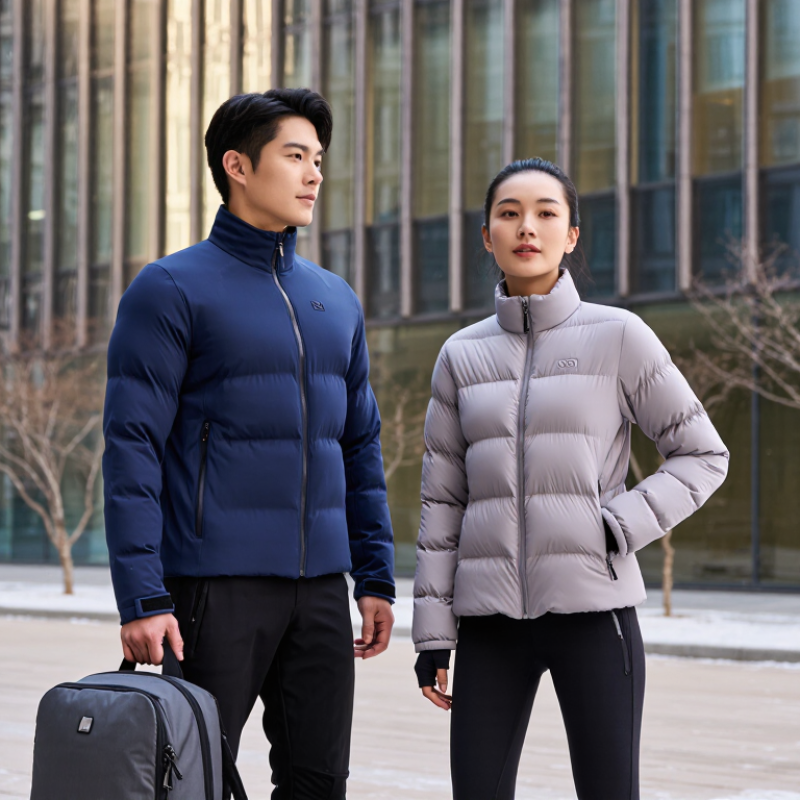
China Best Insulated Jackets Less Bulk More Warmth?

What Makes an Insulated Jacket Warm Without Adding Bulk

Warmth does not come from thickness alone. It comes from trapped air, controlled by insulation, fabric, and fit. The 2021 ASHRAE Handbook identifies 1 clo as 0.155 m²·K/W of thermal resistance. This measure reminds us that insulation should be tested, not judged by appearance.

A high-fill insulation can trap more air with less material. However, fill power measures loft volume, not total jacket warmth. Construction matters just as much. Narrow baffles can reduce cold spots, while a wind-resistant shell protects the trapped air layer. ASTM F1291-22 evaluates clothing insulation with a heated manikin. ISO 11092 measures thermal resistance and evaporative resistance in textiles. These methods reveal performance that a mirror cannot show.

Fit is often overlooked. A tight jacket compresses insulation around the shoulders and chest. That compression creates weak thermal zones. A loose jacket may leak warm air through the collar and cuffs. The best cut leaves room for a base layer without forming empty pockets. Moisture complicates everything. Wet insulation loses efficiency, especially during slow, cold walks. I used to equate more loft with more warmth. That shortcut fails. I still overpack on damp days. Lightweight insulation can feel remarkably warm in dry wind, yet disappointing under steady rain. Performance depends on the whole system, not one impressive specification.

Key Insulation Types Used in China-Made Jackets

China-made insulated jackets commonly use down, polyester fiberfill, or blended insulation. Each type solves a different cold-weather problem.

Duck and goose down deliver strong warmth with low weight. Their loft traps air inside small quilted chambers. Higher fill power usually means better expansion, but it does not guarantee a warmer jacket. Wet down collapses quickly. Check the shell fabric, hood design, and seam construction too. A jacket with 700-fill down may feel colder than a well-built synthetic jacket in damp weather.

Synthetic insulation is usually polyester-based. It keeps more warmth when exposed to drizzle, sweat, or melting snow. It also dries faster and costs less in many production lines. Some factories use hollow fibers, while others use layered sheets for steadier coverage. Recycled polyester can reduce material waste, but its performance still depends on fiber quality and stitching. Labels alone need verification.

Cotton-like insulation appears in some casual winter jackets. It feels soft and familiar, yet it can become heavy after absorbing moisture. I have found that thick padding is not always warmer. Poor baffle placement can create cold strips around the shoulders and zipper. A useful inspection includes bending the elbows, checking loose filling, and wearing the jacket over a thin sweater. The best choice depends on humidity, activity, and storage habits. No insulation wins everywhere.

How Jacket Design Balances Warmth, Weight, and Packability

China Best Insulated Jackets: Less Bulk, More Warmth?

A well-designed insulated jacket does not simply add more filling. It controls how air stays trapped around the body. During cold-weather testing, I compare warmth at the chest, shoulders, cuffs, and lower back. These areas often reveal weak insulation faster than a product label.

Lightweight jackets usually rely on carefully divided baffles. Narrow channels reduce cold spots and prevent insulation from shifting. A shaped hood, adjustable hem, and close-fitting cuffs also limit heat loss. However, tighter construction can reduce loft and feel restrictive. More warmth is not always better if movement becomes uncomfortable.

Packability depends on fabric, filling recovery, and pocket design. A jacket that compresses into a small pouch may lose volume after repeated packing. I check this by stuffing it into a backpack, removing it, and measuring how quickly the insulation regains shape. Recovery matters. It is easy to overlook.

Down-like insulation often compresses efficiently, while synthetic filling can perform more consistently in damp conditions. Neither option is perfect. A thin shell may save weight but sacrifice wind resistance. A heavier shell may protect better but occupy valuable pack space. The most reliable choice matches the jacket to the trip, not just the lowest weight.

Important Materials, Features, and Performance Standards

Choosing a warm insulated jacket starts with materials, not marketing claims. Down offers excellent warmth for its weight because its clusters trap still air. However, moisture can collapse that loft and slow drying. Synthetic insulation keeps more warmth when damp and dries faster, though it often feels bulkier. Recycled shell fabrics can reduce material impact, but durability still depends on weave, coating, and stitching.

Construction matters as much as insulation. Look for baffled chambers that limit cold spots, a close-fitting hood, adjustable cuffs, and a hem that blocks drafts. A smooth lining helps layering, while underarm vents prevent sweat during uphill movement. Water-resistant outer fabric is useful in light rain, but it is not waterproof protection. Seams, zippers, and pocket openings need careful inspection.

Performance standards add useful evidence. Fill power should be measured under a recognized testing method, since different methods can produce different figures. Thermal resistance tests, such as ISO 11092, can support laboratory comparisons, but they cannot predict every person’s comfort. Spray tests, including ISO 4920, indicate surface water resistance rather than full rain protection. Real-world fit remains difficult to measure. I once preferred a lighter jacket in mild wind, then regretted it during a stationary evening stop. No jacket wins every climate. Check independent test reports, care instructions, and temperature conditions before judging warmth.

How to Choose the Best Low-Bulk Insulated Jacket for Your Needs

China Best Insulated Jackets: Less Bulk, More Warmth?

Choosing a low-bulk insulated jacket starts with your real conditions, not the loftiest product description. For damp city commutes, prioritize a water-resistant shell, secure cuffs, and synthetic insulation. For dry, cold travel, lightweight down can offer excellent warmth with less packing space. However, fill power alone can mislead. It measures loft, not the total insulation inside the jacket. Check insulation weight and baffle coverage too.

Look closely at the fit. A close-fitting jacket reduces drafts, but it should still allow a thin base layer and natural arm movement. ISO 11092 testing measures textile thermal resistance under controlled conditions, while ASTM F2732 evaluates insulation performance through thermal manikin methods. These standards improve comparison, though they cannot reproduce wind, sweat, or your personal cold tolerance. Real use differs.

Small details matter. A high collar protects the neck when wind enters at street corners. A two-way zipper helps during cycling or sitting. Avoid excessive stitching across the chest, which can create cold spots. Textile Exchange’s 2024 Materials Market Report estimates recycled polyester made up about 14% of global polyester production in 2023, so recycled shell fabrics are increasingly available. Still, recycled content does not guarantee durability or warmth. I would inspect seam quality and washing instructions before trusting a sustainability claim. The best jacket may look less impressive on a hanger. That is easy to forget.

FAQS

What makes an insulated jacket warm without looking bulky?

Warmth comes from trapped air, not thickness alone. Insulation, shell fabric, baffles, and fit work together. A slim jacket can feel warm in dry wind.

Does higher fill power always mean a warmer jacket?

No. Fill power measures loft volume, not the total insulation inside. Baffle coverage and insulation weight also matter. Labels can mislead.

Which insulation works better in damp weather?

Synthetic insulation usually keeps more warmth during drizzle, sweat, or melting snow. It also dries faster. Wet down collapses quickly.

How should a low-bulk insulated jacket fit?

It should allow a thin base layer and natural arm movement. Tight shoulders compress insulation and create cold zones. Loose cuffs can let warm air escape. Fit matters.

What jacket details help reduce cold spots?

Narrow, evenly filled baffles provide steadier coverage. Excessive chest stitching can create cold strips. Check the zipper, shoulders, and elbow areas by hand.

What shell features are useful for city commuting?

Choose a water-resistant shell, secure cuffs, and a protective collar. A high collar helps at windy street corners. A two-way zipper helps while cycling or sitting.

Can recycled fabric guarantee warmth or durability?

No. Recycled content describes material origin, not insulation performance. Inspect seam quality, fabric feel, and washing instructions. Sustainability claims still need checking.

How can I compare insulation performance more reliably?

Thermal standards can measure resistance under controlled conditions. Heated-mannequin testing offers useful comparisons. Real wind, sweat, rain, and personal cold tolerance may differ. I still overestimate labels sometimes.

Is thick cotton-like padding a good choice for winter?

It feels soft but may become heavy after absorbing moisture. Poor padding can leave cold strips near the shoulders and zipper. More padding is not always warmer.

Conclusion

China-made insulated jackets are increasingly designed to deliver reliable warmth without the heavy, oversized feel associated with traditional winter clothing. The key to what makes modern insulated jackets less bulky but warmer is the use of high-efficiency insulation, carefully controlled fill distribution, and thoughtful pattern engineering. Options may include lightweight synthetic fibers or responsibly sourced down alternatives, each offering different advantages in warmth retention, moisture resistance, durability, and compressibility.

Effective jacket design balances insulation thickness with weight, mobility, and packability. Features such as ergonomic quilting, adjustable hoods, heat-sealing techniques, wind-resistant outer fabrics, and breathable membranes can improve performance without adding unnecessary layers. Material selection and construction quality also influence comfort in changing conditions, while practical standards for warmth, water resistance, breathability, and long-term wear help buyers compare products. The best low-bulk insulated jacket should match the user’s climate, activity level, storage needs, and preferred maintenance routine, providing efficient protection while remaining easy to wear and carry.

Mason

Mason

Mason is a seasoned marketing professional with a deep expertise in the company's offerings and a passion for driving brand awareness. With a strong background in digital marketing strategies, he has an innate ability to connect with diverse audiences and effectively communicate product benefits.......