Choosing the right layer beneath a waterproof suit is not a minor comfort decision. It affects warmth, mobility, concentration, and endurance in rain.
This is why why moisture-wicking base layers are crucial under waterproof suits. A waterproof shell blocks external rain, yet it may also slow internal vapor release. During hiking, construction, or emergency work, sweat can collect around the chest, lower back, and collar. That damp fabric quickly feels cold when activity slows.
The International Organization for Standardization evaluates clothing materials through thermal and evaporative resistance under ISO 11092. Its testing approach confirms that fabric performance involves both heat transfer and moisture movement. The Outdoor Industry Association’s participation reports also show continuing demand for technical apparel, as consumers seek lighter, more adaptable protection. Meanwhile, textile market analyses from Grand View Research identify moisture-management fabrics as an important performance category.
Comfort matters.
Professor George Havenith, an environmental ergonomics researcher at Loughborough University, has explained, “Clothing comfort is a very complex issue, involving many different factors.” His observation is important here. Wicking alone cannot solve poor fit, blocked vents, or an unsuitable waterproof membrane.
The best base layer moves liquid sweat away from the skin, dries quickly, and remains flexible beneath taped seams and shoulder straps. Merino wool can buffer odor and temperature changes. Synthetic knits often dry faster after heavy exertion. Neither material is perfect.
This guide examines China’s top ten moisture-wicking layers for waterproof suits. It considers fiber composition, fabric weight, drying behavior, seam design, and real-use performance. Laboratory claims deserve scrutiny. A layer that excels on paper may still feel clammy during a long, humid climb.
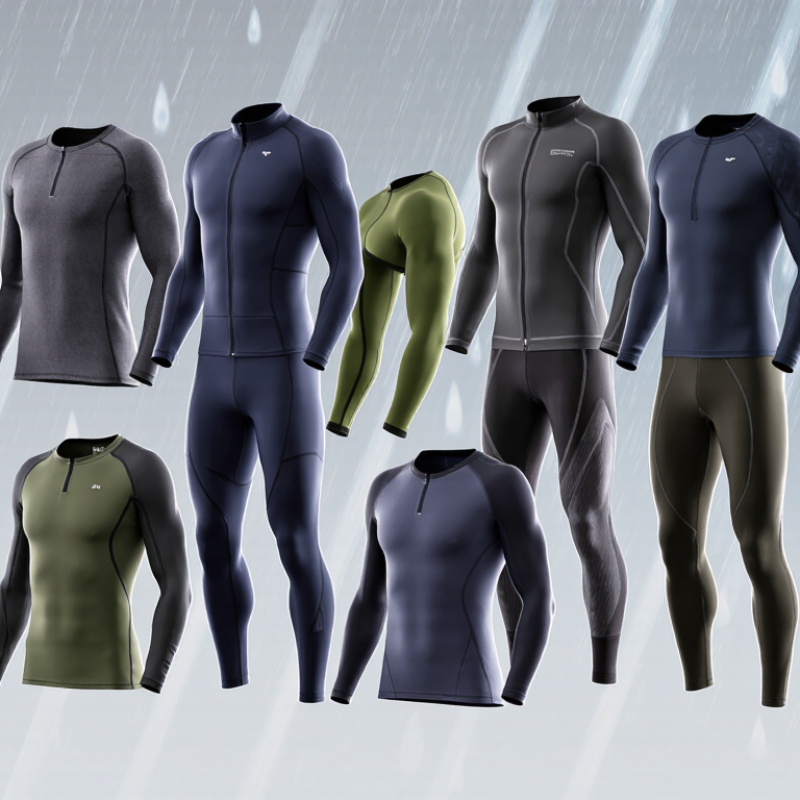
Moisture-wicking layers move sweat away from the skin before it cools your body. They use fine fibers and capillary action to spread moisture across a wider surface. This allows sweat to evaporate faster under a waterproof suit. The layer should feel close to the body, but never restrict movement. A loose base layer can trap damp air and slow drying.
The best options usually include synthetic knits, lightweight merino blends, and grid-textured fabrics. Synthetic fibers dry quickly during hiking, cycling, and outdoor work. Merino helps control odor and feels comfortable across changing temperatures. Cotton is less suitable because it absorbs sweat and stays wet. That small detail becomes uncomfortable at rest.
Waterproof fabric blocks rain, but it does not remove all internal humidity. A breathable membrane works better when the inner layer stays relatively dry. Avoid heavy fleece directly against the skin. It may hold too much moisture beneath the suit. Instead, add a thin insulating layer when temperatures drop. In practical testing, sleeve cuffs and waistbands often remain dampest because they compress the fabric. Fit matters there.
Not every “quick-dry” claim performs equally well. I have learned to question labels without test details. Check drying time, stretch recovery, seam comfort, and performance after repeated washing. A good layer should dry overnight in a ventilated room. It should also remain comfortable when sweat slows. That balance is easy to overlook.
Evaluating China’s top 10 moisture-wicking layers requires more than checking fiber labels. Each option should be tested beneath a waterproof suit, where sweat has nowhere to escape. Look for polyester, nylon, or blended knits with a smooth inner surface. Merino blends may control odor, but they can dry more slowly in cold air. Fabric weight matters.
For a fair comparison, record drying time, moisture spread, stretch recovery, and skin comfort. Place the same absorbent patch inside each garment during controlled wear tests. Weigh it before and after activity. A layer that feels dry may still hold significant moisture. Check the back, chest, and underarm panels separately. Construction details also deserve close inspection. Flat seams reduce rubbing, while elastic cuffs should stay secure without leaving deep marks.
Fit deserves equal attention. An overly tight layer can restrict movement and trap dampness under the shoulders. A loose one may create cold air pockets. Test each garment with the intended waterproof suit, not alone. Request fabric composition, shrinkage data, colorfastness results, and independent performance reports from suppliers. Certificates help, but they do not replace physical testing. My scoring system may favor quick drying over warmth, which is not ideal for every climate. That weakness should remain visible. The best choice depends on activity level, temperature, washing habits, and how long the wearer stays outside.
China Top 10 Moisture Wicking Layers for Waterproof Suits
The best moisture-wicking layers combine suitable fibers with smart construction. Polyester jersey dries quickly and stays affordable. Nylon tricot feels smoother and resists abrasion. Polypropylene moves sweat efficiently, but it may hold body odor. Merino jersey regulates temperature well during changing weather. A polyester-merino blend balances softness, durability, and drying speed. Stretch polyester adds mobility around shoulders and elbows. Lightweight micro-mesh improves airflow near the chest and back. Grid fleece creates small channels for vapor movement. A 3D spacer knit adds warmth without becoming too heavy. Perforated knits reduce wet contact against the skin.
Construction changes performance more than many buyers expect. Flat seams reduce rubbing under waterproof suit panels. Raglan sleeves improve paddling and climbing movement. A close neck helps retain warmth, but it can feel restrictive. Loose cuffs may ventilate better, yet they can bunch beneath gloves. I have found that brushed interiors feel comfortable in cold rain, but they dry slowly after heavy sweating. No fabric wins everywhere. A thinner layer can outperform a warmer one during active work.
Tips: Match the layer to your activity, not only the forecast. Test it under the actual waterproof suit. Check drying time after washing. Avoid cotton near the skin. Inspect seam bulk at the shoulders and waist. A sample fit matters; online specifications cannot show every pressure point. Rethink very thick fleece if you sweat quickly.
| Rank | Layer Type | Typical Fiber Content | Construction Features | Moisture-Wicking Mechanism | Drying Speed | Warmth | Main Advantages | Main Limitations | Best Use Under a Waterproof Suit |
|---|---|---|---|---|---|---|---|---|---|
| 1 | Polyester Micro-Mesh Jersey | 100% polyester | Fine denier yarns, open mesh zones, lightweight single jersey, often with a smooth skin-facing surface | Low moisture regain and capillary channels move sweat away from the skin toward the outer surface | Very fast | Low | Excellent breathability, low weight, low water absorption, easy care | Limited insulation; mesh may snag or feel less protective against abrasion | High-output hiking, cycling, paddling, and warm-weather workwear |
| 2 | Polypropylene Base-Layer Knit | 100% polypropylene | Lightweight hydrophobic yarns, fine-gauge jersey or two-layer knit, sometimes brushed on the inner face | Extremely low moisture regain keeps the fiber from holding liquid; knit structure transports vapor and liquid outward | Exceptional | Low to medium | Very light, fast drying, warm for its weight, and resistant to water absorption | Can retain body odor; lower resistance to heat, sunlight, and abrasion than many polyester fabrics | Cold-weather activity where rapid drying and low garment weight are priorities |
| 3 | Polyester Grid Fleece | 100% polyester | Raised grid or square-channel back, smooth outer face, and reduced contact area for improved air circulation | Hydrophobic fibers and open channels spread perspiration while allowing air and vapor movement | Fast | Medium | Good warmth-to-weight ratio, compressible, breathable, and suitable for layering | More bulky than a thin jersey; exposed grid points can wear under heavy pack straps | Active insulation beneath rain shells in cool and variable weather |
| 4 | Polyester Double-Knit Wicking Layer | 100% polyester or polyester with a small elastane percentage | Two knit faces, stable structure, smooth inner surface, and optional brushed or textured outer face | Fiber hydrophobicity is combined with yarn texturing and a large surface area for evaporation | Fast | Medium | Durable, versatile, comfortable, and less transparent than open mesh | Heavier and slower drying than very thin mesh; can feel warm during intense exertion | General-purpose outdoor, industrial, and travel layering |
| 5 | Nylon-Polyester Stretch Jersey | Approximately 60–80% polyester, 15–35% nylon, and 5–15% elastane | Four-way stretch, compact jersey, body-mapped panels, and flatlock or low-profile seams | Polyester contributes quick drying while textured yarns and close fit move perspiration across the fabric | Fast | Low to medium | Excellent mobility, smooth fit, good durability, and reduced seam chafing | Elastane can reduce high-temperature drying durability; nylon absorbs more moisture than polyester | Technical sports and workwear requiring close fit and unrestricted movement |
| 6 | Merino Wool Jersey | 100% fine merino wool | Fine-gauge jersey, flat seams, and fiber diameter commonly selected for next-to-skin comfort | Hydrophilic fibers absorb and buffer vapor while the wool surface helps spread liquid and control odor | Slow to medium | Medium | Excellent temperature regulation, odor resistance, and comfort across changing conditions | Holds more water and dries more slowly than synthetic fibers; may shrink or pill if poorly cared for | Multi-day trekking, travel, and moderate-intensity use in cool conditions |
| 7 | Merino-Synthetic Blend Layer | Approximately 30–60% merino wool blended with polyester, nylon, or both | Core-spun or intimate-blend yarns, fine jersey, and reinforced zones for improved durability | Wool buffers humidity and odor while synthetic fibers improve liquid transport, strength, and drying time | Medium to fast | Medium | Balanced comfort, odor control, durability, and moisture management | Usually costs more than basic synthetics and may still dry slower than a fully synthetic layer | Variable-weather hiking, commuting, and extended outdoor use |
| 8 | Polyester 3D Spacer Knit | 100% polyester | Two outer knitted surfaces connected by spacer yarns, creating a ventilated three-dimensional structure | Air gaps improve ventilation and reduce skin contact while polyester faces transport moisture outward | Medium to fast | Medium to high | Cushioning, dimensional stability, airflow, and good separation from a damp shell | Bulkier than jersey; compression and laundering can affect thickness and airflow | Protective or technical suits where comfort and cushioning are important |
| 9 | Nylon Warp-Knit Tricot | 100% nylon or nylon with a small elastane percentage | Tightly formed warp-knit loops, smooth face, stable edges, and optional brushed inner surface | Textured filaments and knit capillaries distribute perspiration, although nylon retains more moisture than polyester | Medium | Low to medium | Smooth hand feel, high abrasion resistance, dimensional stability, and good snag resistance | Higher moisture regain and slower drying than polypropylene or lightweight polyester | Work suits, utility garments, and applications needing a durable inner layer |
| 10 | Lyocell-Polyester Blended Jersey | Approximately 30–60% lyocell blended with polyester and optional elastane | Soft single or double jersey, smooth next-to-skin face, and blended yarns for improved strength | Lyocell absorbs and spreads moisture across the surface while polyester improves capillary transfer and drying | Medium | Low to medium | Soft hand feel, good vapor buffering, reduced static, and a comfortable skin contact surface | More absorbent and slower drying than fully synthetic layers; wet fabric can feel heavier | Light-duty outdoor use, commuting, and comfort-focused waterproof clothing |
| Performance ratings are comparative and represent typical fabric behavior. Actual results vary with yarn size, fabric weight, finishing chemistry, garment fit, seam design, shell breathability, and laundering. Moisture regain generally increases from polypropylene and polyester to nylon, lyocell, and wool. | |||||||||
For waterproof suits, China’s top ten moisture-wicking layer choices include polyester mesh, polypropylene knit, merino wool, nylon-spandex jersey, polyester grid fleece, lyocell blends, spacer knit, hydrophilic liner fabric, recycled polyester jersey, and wool-synthetic blends. Polyester mesh and polypropylene usually dry fastest, while merino controls odor and temperature more naturally. Nylon-spandex improves stretch and movement. However, tighter fabrics can trap heat under sealed waterproof shells.
Textile Exchange’s Materials Market Report 2024 estimates polyester represented about 59% of global fiber production in 2023. Its durability and quick drying explain its popularity in technical clothing. Yet fiber choice alone is not enough. ISO 11092 testing measures thermal resistance and evaporative resistance, which are useful indicators for comparing comfort beneath waterproof suits. Grid fleece offers warmth and abrasion resistance, but may feel bulky during high-output work. Spacer knits improve airflow, although their durability varies between constructions.
For cold rain, merino-synthetic blends provide balanced comfort, moisture control, and odor resistance. For warm, strenuous use, polypropylene and lightweight polyester perform better. Lyocell feels soft, but it can dry slowly after heavy saturation. Recycled polyester can match conventional polyester, though product quality depends on yarn and finishing. Some claims remain too optimistic. Real testing should include repeated washing, seam pressure, and movement, not only laboratory fabric readings. Short tests can mislead.
When comparing moisture-wicking layers for waterproof suits, begin with fabric performance, not appearance. Choose a close, flexible fit that touches your skin without restricting movement. Polyester dries quickly during active work, while merino wool manages odor and temperature well. Blended fabrics can balance softness, durability, and drying speed. Avoid cotton near the skin. It absorbs sweat and stays damp.
Wear the base layer directly under the waterproof suit. Keep it smooth around your shoulders, waist, and wrists. Small folds can create pressure during long walks or boat work. Add a thin mid-layer only when conditions demand it.
Fit matters. I once wore a thick thermal shirt in mild rain, and it trapped sweat badly. The suit remained dry outside, but I felt cold inside. My mistake was choosing warmth before breathability.
Wash the layer soon after heavy use. Follow its care label, use mild detergent, and skip fabric softener. Softener may reduce moisture spreading across the fabric. Warm or cool water is usually safer than hot water.
Air-dry it away from direct heat, especially when elastic fibers are present. Check seams, cuffs, and odor after washing. Do not guess. A garment that smells clean may still hold body oils. Rotate two or three layers when possible, and replace one when its fabric stays clammy, stretches unevenly, or loses shape.
Test each layer beneath the intended waterproof suit. Sweat has nowhere to escape. Record drying time, moisture spread, stretch recovery, and skin comfort. A dry feeling can be misleading.
Lightweight polyester mesh and polypropylene often dry quickly. They suit warm, strenuous activities. Polyester is durable and widely used. Actual results still depend on yarns and finishing.
Merino-synthetic blends offer balanced warmth, odor control, and moisture management. They can feel comfortable during long outdoor periods. However, some blends dry slowly in cold air. That trade-off matters.
Yes, fabric weight changes warmth, drying speed, and bulk. Grid fleece adds warmth and abrasion resistance. It may feel heavy during high-output work. Thin fabrics can feel cooler and dry sooner.
An overly tight layer may restrict movement and trap dampness. A loose layer can create cold air pockets. Test the garment with the waterproof suit. Do not judge it alone.
Look for flat seams that reduce rubbing. Check whether elastic cuffs stay secure without deep marks. Inspect the chest, back, and underarm panels separately. Small details become obvious after several hours.
Place the same absorbent patch inside every garment. Weigh it before and after controlled activity. Compare moisture levels after washing and drying. Short tests can mislead.
No, certificates support comparison but cannot replace physical testing. Thermal and evaporative resistance tests provide useful indicators. Suppliers should also provide composition and shrinkage data. Independent reports help, but I would still test personally.
No single layer is ideal everywhere. Lightweight polyester may suit warm, active use. A wool-synthetic blend may suit cold rain. My scoring may favor quick drying too much. That weakness deserves attention.
This guide explores why moisture-wicking base layers are crucial under waterproof suits, especially when working, hiking, or taking part in outdoor activities in wet conditions. It explains how these layers move perspiration away from the skin, reduce clamminess, help regulate body temperature, and improve comfort beneath waterproof outerwear. The article also presents a practical comparison of China’s top 10 moisture-wicking layer options, focusing on fabric types, knitting or weaving methods, stretch, breathability, drying speed, insulation, and overall construction quality.
Readers will learn how different materials and designs perform in moisture control, comfort, durability, and suitability for various climates and activity levels. The guide also offers advice on selecting the right fit and thickness, layering effectively, wearing the garment correctly, and maintaining its performance through proper washing, drying, and storage. By understanding these factors, users can choose a dependable base layer that supports comfort and long-term use under a waterproof suit.

Jennie Fashion