Choosing a fluorocarbon-free water repellent is no longer a niche sustainability decision. It is becoming a practical performance and compliance question for textile manufacturers, brands, and consumers. ECHA’s PFAS restriction proposal covers more than 10,000 substances, showing the scale of concern surrounding persistent fluorinated chemistry. Meanwhile, Textile Exchange’s 2024 Materials Market Report confirms that synthetic fibres remain dominant in global production, increasing the importance of safer finishing systems across large supply chains.
So, why are fluorocarbon-free water repellents becoming the industry standard? The answer combines regulation, consumer expectations, and measurable product performance. Silicone, hydrocarbon, dendrimer, and polyurethane-based finishes can provide useful water resistance without intentionally using fluorocarbon chemistry. However, “fluorocarbon-free” does not automatically mean durable, breathable, or environmentally harmless. That distinction matters.
Performance must be tested, not assumed. AATCC 22 and ISO 4920 can evaluate surface water repellency, while laundering tests reveal whether a jacket still sheds droplets after repeated washing. In practical trials, a fresh finish may produce a strong spray rating, yet lose effectiveness after abrasion, detergent exposure, or heat. Small details matter, such as fabric construction, curing temperature, add-on level, and application uniformity. No finish wins every test.
This guide explains how to compare chemistries, interpret technical data sheets, and question unsupported environmental claims. It also considers durability, hand feel, breathability, wastewater management, and total lifecycle impact. The difficult truth is that fluorocarbon-free options still involve trade-offs. Better decisions require evidence, supplier transparency, and testing conditions that reflect real use rather than perfect laboratory samples.
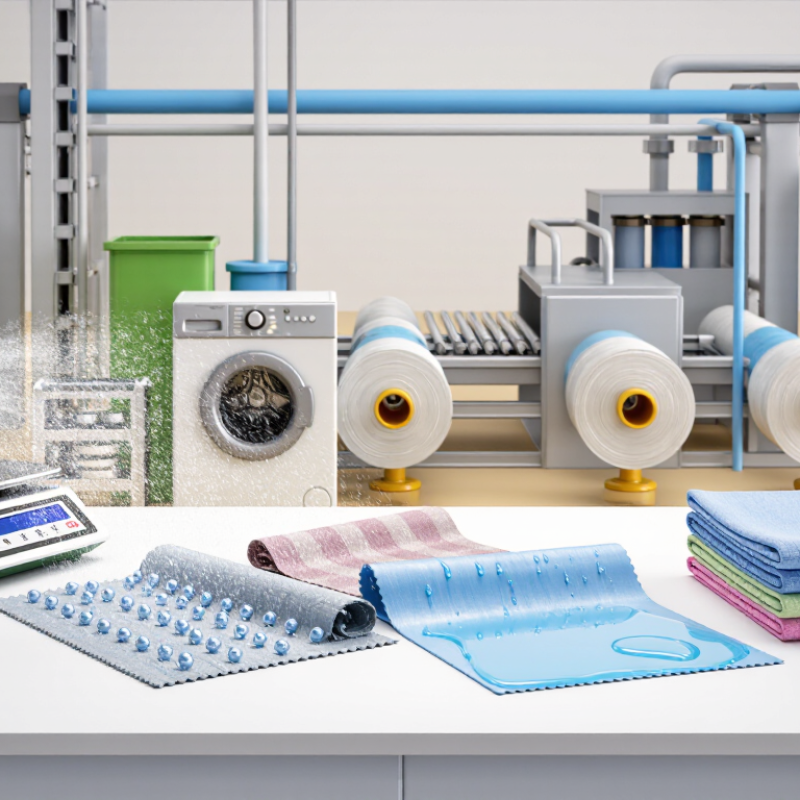
How to Choose Fluorocarbon Free Water Repellents?
Fluorocarbon-free water repellents are textile or surface treatments that resist liquid water without fluorinated chemistry. They may contain silicones, hydrocarbon waxes, dendrimer systems, polyurethane dispersions, or other film-forming polymers. These finishes create a low-energy surface, helping droplets bead and roll away. They do not make fabric permanently waterproof. Breathability, softness, wash durability, and oil resistance may change.
During practical sample checks, a treated jacket may shed light rain but wet through at shoulder seams under a backpack. That difference matters. Water repellency describes surface beading. Waterproofing usually requires a membrane, sealed seams, or a dense coating. Fluorocarbon-free options often provide weaker oil resistance than older fluorinated finishes. Some require heat curing or precise dosage. Small mistakes can cause patchy marks. The label can also be narrower than expected, so ask whether it is verified as PFAS-free.
Choose according to the fabric, application method, washing routine, and weather exposure. Request a full chemistry statement, test method, durability results, and clear terminology from the supplier. Check rain performance after repeated laundering, not only on fresh fabric. I would also inspect hand feel and odor on a real sample. A finish can pass a laboratory test and disappoint outdoors. That uncomfortable gap deserves attention.
Fluorocarbon-free water repellents commonly use silicone, hydrocarbon, polyurethane, or dendrimer-based chemistries. The normalized screening scores below summarize practical selection priorities on a 1–5 scale: higher values indicate a stronger typical advantage, while actual results depend on the fabric, formulation, curing conditions, and laundering. Always verify performance with standardized spray, rain, wash-durability, and breathability tests.
Choosing fluorocarbon-free water repellents starts with the material, not the marketing label. These finishes commonly use silicones, waxes, dendritic polymers, or hydrocarbon chemistry. They reduce surface energy, helping droplets bead and roll away. They do not create an invisible waterproof membrane. A fabric still needs a tight weave, coating, or breathable laminate for pressure resistance.
Polyester and nylon often accept fluorocarbon-free finishes well after controlled heat activation. Textile Exchange’s Materials Market Report 2024 recorded about 124 million tonnes of global fiber production in 2023. Polyester represented approximately 57%, making synthetic-fiber compatibility commercially important. Cotton, linen, and viscose absorb moisture into their fibers, so repellency may decline faster. A laboratory spray rating can look strong, while washing and abrasion reveal weaker areas. Leather requires controlled penetration, because excess finish may stiffen the grain. Wool needs gentler curing temperatures. Results remain variable.
Tips: Match the chemistry to the fiber blend and end use. Request AATCC TM22 or ISO 4920 spray-test results, plus laundering and abrasion data. Check hydrostatic pressure separately; spray resistance does not equal waterproofness. In field evaluations, seams, cuffs, and heavily rubbed panels often fail first. That inconvenient detail is easy to overlook. Reapply only after cleaning instructions are verified, because excess treatment can reduce breathability or alter hand feel. These checks support the technical findings reported in Textile Exchange’s 2024 materials data.
Choosing fluorocarbon-free water repellents requires more than checking a “green” claim. Compare the formula’s chemistry, target fabric, and performance data. Silicone-based finishes often create a soft hand and strong initial beading. Dendrimer or hydrocarbon systems may preserve breathability, but results vary by fiber and curing conditions. That variation matters. A finish tested on polyester may behave differently on cotton or a blended shell. Ask for laboratory methods, wash-cycle details, and fabric weights before trusting a performance number.
Durability should be measured after repeated laundering, abrasion, and bending, not only after application. Look for spray-rating changes, drying time, oil resistance, and water-vapor transmission. A highly water-repellent surface can still feel clammy if breathability falls. Check application temperature and wet pickup, because factory energy use and uneven dosing affect the real footprint. In production trials, I would inspect edge coverage, nozzle consistency, and shade change under direct light. Small defects become expensive at scale.
Safety and reliability depend on the whole formulation, including carriers, preservatives, and residuals. Request a current safety data sheet, restricted-substance statement, and independent test reports. “Fluorocarbon-free” does not automatically mean harmless or biodegradable. This is easy to overlook. Compare worker handling requirements, wastewater treatment needs, and packaging instructions with local rules. Cost per kilogram is also incomplete; calculate cost per treated square meter and include rework. I would run a controlled pilot, keep untreated samples, and retest after storage. No formula wins every category. A breathable finish may sacrifice some oil resistance, while a durable one may alter softness. Those trade-offs deserve honest documentation.
How to Choose Fluorocarbon Free Water Repellents?
Selecting a fluorocarbon-free water repellent starts with the material, not the product label. Cotton, polyester, leather, and blended fabrics absorb treatments differently. A spray may suit finished outdoor clothing, while a bath application may provide more even coverage for fabric rolls. Check the surface first. Its texture, color, breathability, and existing finish can change the result.
For clothing, choose a treatment that preserves softness and air permeability. A stiff hand feel can make a jacket uncomfortable, even when water beads well. Footwear needs stronger abrasion resistance, especially around toes and seams. Leather also requires a compatible conditioner, because some water-based formulas may darken unfinished surfaces. Upholstery needs low-odor application and careful drying. Test a hidden area before treating the entire item.
Performance should be judged after use, not only after application. Wash a treated fabric, rub it against a rough surface, and observe water behavior. Some fluorocarbon-free formulas provide excellent water repellency but weaker oil and stain resistance. That limitation matters in workwear and food-service environments. Reapplication may be necessary. It is easy to overapply, though. Excess treatment can leave marks, reduce breathability, or attract dust. Follow the technical sheet, measure the dosage, and record drying time. Small trials often reveal more than confident claims.
Safe Use, Performance Testing, and Environmental Considerations
A fluorocarbon-free label needs careful reading. It should state PFAS exclusion clearly, not merely “PFOA-free.” The OECD’s 2021 PFAS report lists 4,730 substances, showing why narrow claims can mislead. Request a current safety data sheet and technical data sheet. Check ingredients, carrier solvents, curing temperature, and worker exposure controls. Use gloves, eye protection, local ventilation, and measured dosing. Small details matter.
Performance testing should match the product’s real duty. AATCC TM22 evaluates surface wetting through a spray rating, while ISO 4920 offers a comparable textile assessment. Test new fabric, after laundering, and after abrasion. Record water temperature, wash cycles, drying method, and fabric mass.
A finish may score well at the factory gate, then weaken after three washes. That result is not failure alone. It reveals the use limit. Oil repellency may also decline when fluorocarbon chemistry is removed, so avoid promising every benefit at once.
Environmental review must cover the whole process. Textile Exchange’s Materials Market Report 2024 estimates global fiber production reached 124 million tonnes in 2023. Even a low-dose finish deserves attention at this scale. Prefer water-based systems when verified, but do not assume “water-based” means low impact. Ask for wastewater data, biodegradation evidence, and residual-chemical testing. Laboratory scores are often cleaner than factory reality. Recheck them under production conditions.
The honest answer may be less impressive.
They lower surface energy, helping droplets form beads and roll away. They do not create a waterproof membrane.
Polyester and nylon often perform well after controlled heat activation. Cotton, linen, and viscose may lose repellency faster.
Washing and abrasion expose weak areas. Seams, cuffs, and heavily rubbed panels often fail first.
No. A tight weave, coating, or breathable laminate provides pressure resistance. Spray resistance only measures surface wetting.
Clothing needs softness and air permeability. Footwear needs stronger abrasion resistance around toes and seams.
Test a hidden area first. Leather may darken or stiffen, while upholstery needs low-odor application and careful drying.
Wash the material, rub it against a rough surface, and observe water behavior. Small trials reveal practical limits.
Request current safety and technical sheets. Check ingredients, curing temperature, ventilation needs, and exposure controls.
Not always. Ask for wastewater data, biodegradation evidence, and residual-chemical testing. The real factory result may look less impressive.
Fluorocarbon-free water repellents are surface treatments designed to reduce water absorption without relying on fluorinated compounds. They work by forming a breathable, water-resistant layer that interacts differently with textiles, leather, wood, masonry, and other materials. Performance depends on the formula’s compatibility with the substrate, durability, breathability, drying time, appearance, application method, and resistance to washing, abrasion, or weather exposure. Choosing the right product therefore requires matching its properties to the material, intended use, and expected environmental conditions.
Why are fluorocarbon-free water repellents becoming the industry standard? Their growing adoption reflects increasing demand for effective protection with a more environmentally responsible profile. Safe handling, suitable ventilation, correct application rates, and clear technical guidance are essential for reliable results. Performance should be verified through practical testing, such as water beading, absorption, color change, and durability checks under realistic conditions. By comparing safety information, material compatibility, lifecycle considerations, and measured performance, users can select a balanced solution that protects surfaces while supporting responsible product development.

Jennie Fashion