Industrial workwear is moving beyond fabric, stitching, and visibility strips. In 2026, connected garments may monitor heat exposure, posture, fatigue, and dangerous movement. Sensors woven into sleeves can track body temperature. Conductive yarns can transmit data without rigid cables. A heated vest may respond before a worker feels severe cold.
This is how smart textiles are changing the future of industrial workwear. MarketsandMarkets estimates that the smart textiles market could grow from approximately USD 4.7 billion in 2024 to USD 9.3 billion by 2029. The report identifies wearable technology, healthcare, and protective clothing as important growth areas. Meanwhile, the International Labour Organization continues to highlight occupational safety, prevention, and decent working conditions as global priorities. These trends make intelligent protective clothing commercially relevant, not merely experimental.
Textile electronics researcher Dr. Trisha Andrew has described the central challenge clearly: “The goal is to make electronics that are as comfortable as clothes.” That standard matters on a noisy factory floor. A worker should not feel a battery pressing against the ribs. A washable sensor should survive repeated shifts, sweat, dust, and careless folding. The technology still has weaknesses. Battery life can disappoint. Data may be incomplete. Forecasts are not factory results. Employers must also protect worker privacy and explain how information is used. The strongest 2026 solutions will combine verified safety performance, practical comfort, and honest human oversight. Smart workwear should assist judgement, never quietly replace it.
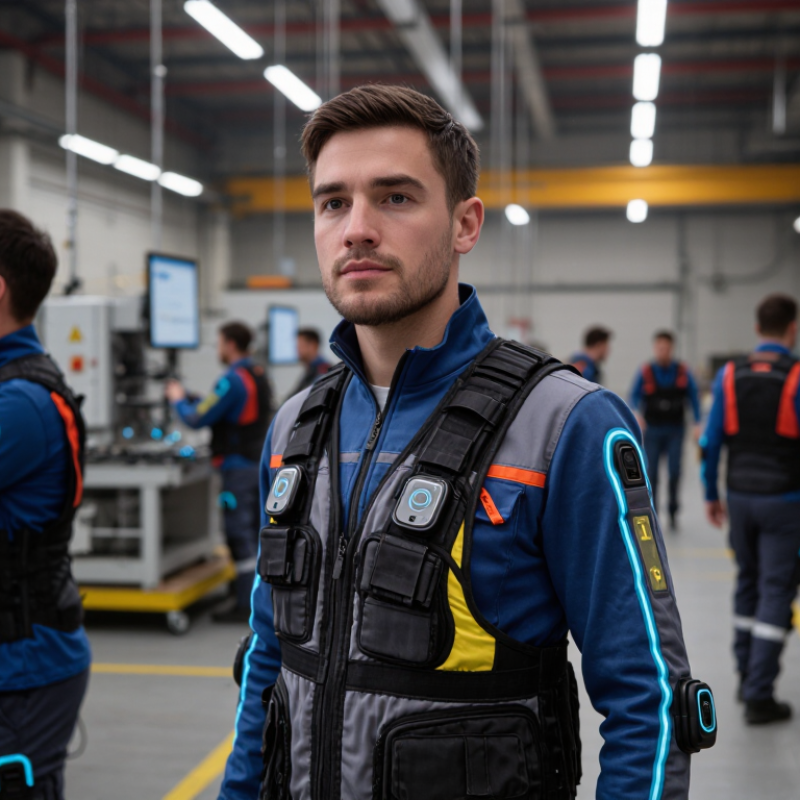
Smart textiles are fabrics that respond to the body or surrounding conditions. They may include conductive fibers, tiny sensors, heating elements, or phase-changing materials. Some monitor skin temperature, movement, or physical strain. Others can warm a worker’s back or improve visibility in low light. The fabric remains wearable, but it behaves more like a quiet tool.
Industrial workwear needs these functions because working conditions change quickly. A warehouse worker may move between a cold loading area and a warm production floor. A maintenance technician may kneel, climb, and carry equipment for several hours. Smart clothing can track repeated motion and alert workers when heat stress or fatigue may become serious. It cannot replace training or proper supervision. It should support them.
Practical testing matters more than impressive demonstrations. A sensor that works in a laboratory may fail after repeated washing, oil exposure, or rough handling. The clothing must remain comfortable, breathable, and easy to repair. Occupational safety specialists should verify its readings under real job conditions. Workers also need clear control over collected data. Early prototypes often feel bulky. That weakness deserves attention, not marketing language. A useful garment should survive a long shift without distracting the person wearing it.
Smart textiles are fabrics that respond to body movement or surrounding conditions. They may contain sensors, conductive fibers, heating elements, or heat-changing materials. The fabric remains wearable. It behaves like a quiet tool.
Industrial conditions can change quickly during one shift. A worker may move from a cold loading area to a warm production floor. Smart clothing can monitor heat, movement, posture, or physical strain. It supports safety work, but cannot replace training or supervision.
Sensors can measure skin temperature, body movement, posture, and repeated physical strain. They may sit near the shoulder, wrist, or chest. A vest might vibrate near a dangerous temperature zone. False alerts remain possible.
Heat-changing fabrics can release stored heat during intense activity. Ventilation zones may reduce discomfort inside protective layers. Flexible heating elements can warm workers in cold environments. Small batteries may still add weight during long shifts.
It should withstand sweat, dust, oil, rough handling, and repeated washing. Electronic parts need protection from moisture. Seams, connectors, and sensors require repeated testing. Laboratory success is not enough.
Workers need proper fitting, calibration, maintenance records, and independent safety checks. Sensors can give poor readings when sleeves fold or modules shift. Comfort also matters across a ten-hour shift. A bulky garment may fail in practice.
Connected clothing can collect movement, location, temperature, or exposure information. Workers should know what the garment records and why. Limited edge processing can reduce unnecessary data transfers. More dashboards do not automatically create safer work.
Sustainability remains unresolved when batteries and sensors cannot be removed. Replaceable modules and washable connectors could extend garment life. Repairable layers may reduce textile waste. The design may still be wasteful if electronics are discarded with the fabric.
Smart textiles are transforming industrial workwear by combining protective clothing with embedded sensing, connectivity, and adaptive materials. Unlike traditional garments, these advanced fabrics can monitor temperature, movement, fatigue, exposure to hazardous conditions, and other workplace signals in real time. Core technologies may include flexible sensors, conductive fibers, wearable electronics, data systems, and temperature-regulating or self-adjusting materials. Together, they help employers identify risks earlier while giving workers greater comfort, mobility, and situational awareness.
Across construction, manufacturing, logistics, energy, and other demanding environments, smart garments can support accident prevention, health monitoring, communication, and improved task performance. However, their development must address durability, privacy, battery life, maintenance, data security, cost, and compatibility with safety standards. In 2026, continued progress will focus on making these garments lighter, more reliable, washable, and easier to integrate into daily operations. Ultimately, how smart textiles are changing the future of industrial workwear depends on balancing advanced functionality with worker trust, practical usability, and responsible design.

 Jennie Fashion