Working through the night changes how the body handles cold, fatigue, and reduced visibility. Dark roads, wet platforms, and quiet industrial yards create risks that daylight workers may underestimate. Knowing how to stay warm and visible during night shifts requires more than wearing a thick coat. Clothing must retain heat, allow movement, and help others notice you quickly.
Practical experience shows that several thin layers often work better than one bulky jacket. A moisture-wicking base layer keeps sweat away from the skin. An insulating middle layer traps warmth, while a weather-resistant outer layer blocks wind and rain. Add a high-visibility vest or jacket with reflective strips around the torso, arms, and legs. Check that mud, oil, or snow has not covered the reflective material. Small details matter.
Warm gloves should preserve finger movement for tools, radios, and vehicle controls. Insulated, slip-resistant footwear helps protect against cold floors and icy surfaces. Bright task lighting can reveal hazards, but it should not shine into drivers’ eyes. Keep spare gloves and dry socks nearby. They can make a difficult shift manageable.
No jacket solves every problem. Clothing may feel warm at the start, then become damp and restrictive. That mistake is easy to miss. Regular checks, planned warm-up breaks, and honest reporting of numbness or confusion support safer decisions. Employers should assess local weather, work conditions, visibility, and required protective equipment. Good preparation is practical, not perfect.
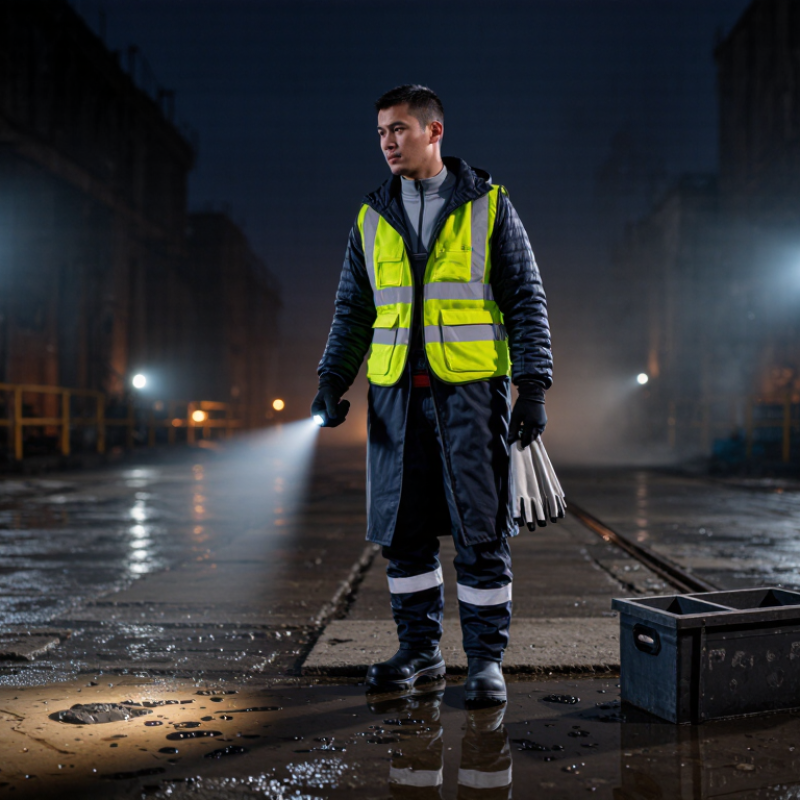
Night work demands more than a thick jacket. Warmth and visibility must match the task, weather, and movement required. A stationary worker may need insulated layers, while a walking inspector can overheat quickly. I have found that moisture becomes the real problem after several hours. Damp fabric chills the body when wind rises. Choose a moisture-managing base layer, an insulating middle layer, and a weather-resistant outer layer. Keep ventilation possible. A perfect system rarely exists.
Visibility requirements should begin with the background, not personal preference. Dark roads, dusty yards, and bright vehicle lights create different hazards. Use high-contrast clothing with reflective sections on the torso, arms, and legs. This helps others recognize a human shape, not just a bright patch. Match clothing to the lighting and traffic pattern. A worker near moving vehicles may need greater visibility than someone inside a fenced facility. Check visibility after sunset, because daylight can hide weak contrast. This simple check is often skipped.
Tips: Test clothing before the shift. Keep reflective surfaces clean and unobstructed. Replace damaged reflective material. Avoid loose scarves near equipment. Carry spare dry gloves. Supervisors should confirm clothing choices during the site assessment. In practice, comfort can encourage compliance, but comfort alone is not protection. I sometimes choose a lighter layer too early, then regret it near dawn. That mistake reminds me to plan for the coldest hour, not the warmest start.
| Work Condition | Typical Environment | Warmth Requirement | Recommended Clothing System | Visibility Requirement | Practical Controls |
|---|---|---|---|---|---|
| Mild night | Above 10°C; dry conditions; light wind | Light insulation with moisture control | Moisture-wicking base layer plus a breathable long-sleeve outer layer | High-visibility upper-body garment with reflective material suitable for the work area | Keep reflective areas clean and unobstructed; use task lighting where needed |
| Cool night | 0–10°C; intermittent wind or light rain | Moderate insulation and protection from moisture | Base layer, insulating mid-layer and water-resistant high-visibility outer shell | Use compliant high-visibility clothing with reflective bands around the torso and limbs where required | Add a warm hat that does not cover required reflective markings; wear slip-resistant footwear |
| Cold night | −10–0°C; steady wind, rain or wet snow | High insulation while maintaining freedom of movement | Thermal base layer, insulating mid-layer, insulated high-visibility jacket and weatherproof trousers | Select the highest visibility level appropriate to traffic speed, background and separation from vehicles | Use insulated gloves that preserve grip; replace wet layers promptly; schedule warm-up breaks |
| Very cold night | Below −10°C; strong wind, ice or prolonged outdoor exposure | Maximum practical insulation with wind and moisture protection | Multiple thermal layers, insulated weatherproof outerwear, insulated boots, gloves and head protection | High-visibility outerwear must remain visible over all layers; avoid loose items that can hide reflective material | Limit exposure time, provide heated rest areas, monitor for cold stress and maintain clear access routes |
| Rainy or wet night | Any temperature with persistent rain, spray or wet surfaces | Prevent evaporative and conductive heat loss | Moisture-wicking inner layer, insulating layer and waterproof breathable high-visibility shell | Use reflective material that remains effective when wet and keep fluorescent fabric free from mud | Inspect waterproof closures and seams; remove standing water and improve drainage or lighting |
| High-traffic work zone | Workers near moving vehicles, mobile equipment or temporary traffic routes | Warmth must not restrict walking, climbing, hearing or visibility | Close-fitting layered clothing with a high-visibility outer garment designed for the task | Use garments certified to the applicable local high-visibility standard and selected for the traffic risk | Separate people and vehicles where possible; use illuminated work areas, barriers and a traffic-control plan |
| Low-light or glare conditions | Unlit areas, backlighting, fog, dust or strong vehicle headlights | Choose breathable insulation to avoid sweat that can later chill the worker | Adjustable layers with a high-visibility outer layer; keep hoods and collars from blocking peripheral vision | Combine fluorescent background material for daytime or ambient light with retroreflective material for darkness | Aim lighting away from workers’ eyes; reduce glare and inspect visibility from the driver’s viewpoint |
Wear three layers: a moisture-managing base, an insulating middle, and a weather-resistant outer layer. Choose high-visibility clothing that fits over winter layers. Keep reflective panels exposed. Cold reduces movement speed. Visibility still comes first.
Reflective strips should cross the chest, back, arms, and legs. These areas catch headlights from several directions. Add small lights near the shoulders or lower back. Body outlines can disappear in darkness. Keep the strips clean.
Steady lights may be easier for drivers and coworkers to recognize. Use the setting allowed by site procedures. Avoid excessive brightness near other workers. It can distract them. Test both settings in real work conditions.
Check faded fabric, torn strips, loose stitching, blocked surfaces, and damaged fasteners. Test lamps, warning lights, and spare batteries. Inspect lenses for cracks and remove mud. Do not wait for an incident. Small faults grow.
Dirt can reduce the brightness of reflective material and lights. Clean reflective surfaces gently, following the garment instructions. Wipe light lenses before entering the work area. A vest may look fine indoors but fail under wet headlights. That is easy to miss.
Do not cover reflective panels with bags, straps, tools, or loose outerwear. Place equipment where it does not hide the chest or back. Check your outline from several angles. A practical setup may still be flawed.
Cold hands can delay tool handling and simple responses. Choose gloves that maintain grip and allow secure movement. Inspect footwear for moisture, wear, and reduced traction. Warmth supports reliable work. It is not just comfort.
Test clothing and lights beside uneven ground, moving vehicles, and actual work lighting. A bright storage room gives false confidence. Compare equipment with weather and traffic exposure. Record faults, repairs, and replacements. Rushed checks remain a weakness.
Staying warm and visible during night work requires a practical balance of insulation, visibility, comfort, and mobility. To understand how to stay warm and visible during night shifts, begin by assessing the weather, work environment, and length of the shift. Choose layered clothing with suitable insulation for cold, wet, or windy conditions, while ensuring each layer allows comfortable movement. Add high-visibility garments with reflective sections and, when appropriate, lighted features to help others recognize your position in low-light areas.
Comfort and protection are especially important during long shifts. Clothing should fit securely without restricting bending, walking, or equipment use, and materials should help manage moisture and changing temperatures. Before work begins, inspect reflective surfaces, lights, fasteners, insulation, and other safety equipment for damage or reduced performance. Clean, dry, recharge, repair, or replace items as needed. Regular checks help maintain reliable warmth and visibility throughout the entire night.

 Jennie Fashion